
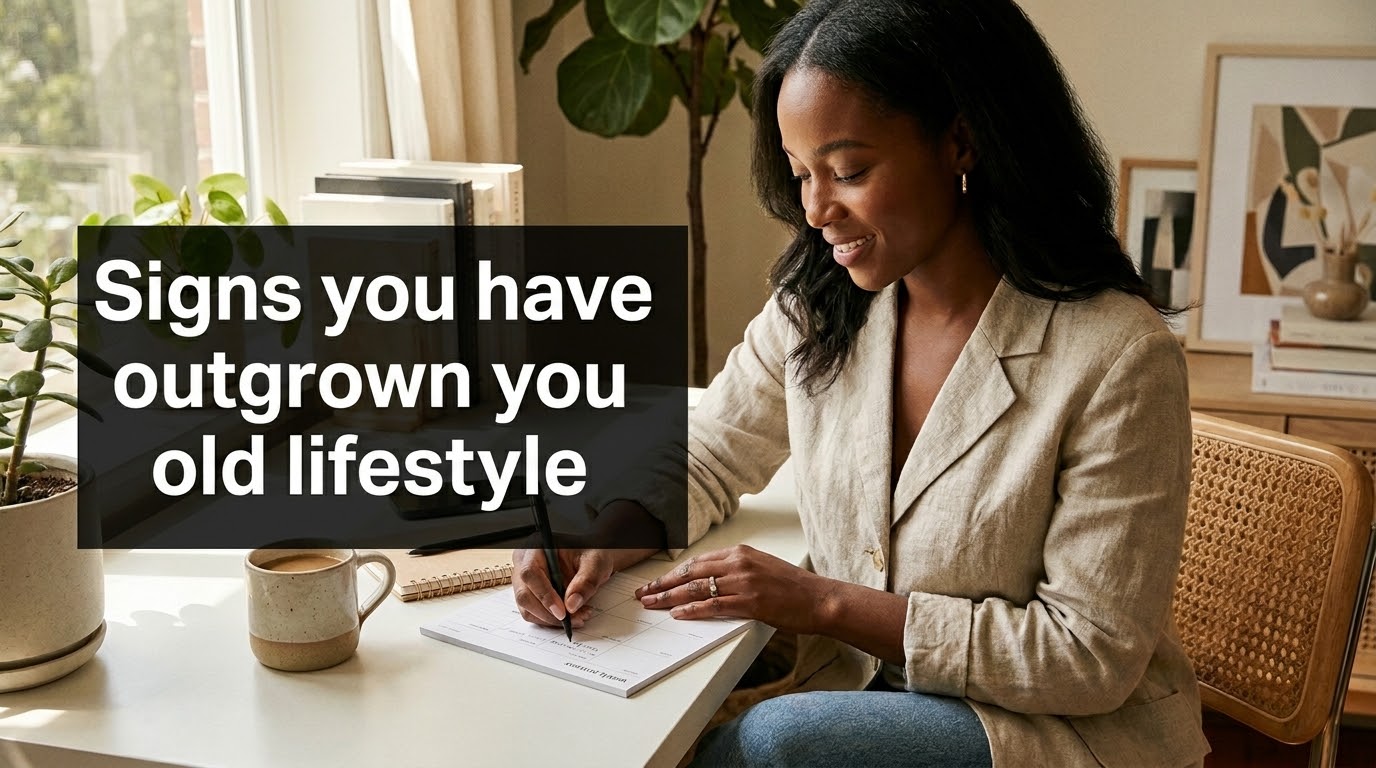
Sometimes, the life you once enjoyed starts to feel a little different.
The routines that used to excite you feel repetitive. The things you once spent money on no longer seem worth it. Even the way you spend your free time may not feel as satisfying as it once did.
And you might find yourself wondering what’s changed.
It doesn’t always mean you’re unhappy or that you need to make a major life decision. Sometimes, it simply means your interests, priorities, and values are changing.
Outgrowing your old lifestyle isn’t necessarily about rejecting your past. It’s about recognizing that the person you are becoming may need something different.
Here are 10 signs that your lifestyle might no longer reflect who you are today.
1. The Things You Used to Enjoy Don’t Excite You Anymore
You may notice that activities you once looked forward to now feel ordinary or even tiring.
Perhaps you used to enjoy going out every weekend, shopping frequently, or keeping up with every new trend. Now, you find yourself wanting quieter weekends, more meaningful experiences, or time to focus on personal goals.
This doesn’t mean those old interests were wrong. They simply may not be as important to you anymore.
Sometimes, growth shows up in the things you no longer feel drawn to.

2. You’re Becoming More Selective About How You Spend Your Time
You may start paying closer attention to where your time goes.
You might no longer feel comfortable saying yes to every invitation, taking on unnecessary commitments, or spending hours on activities that leave you feeling drained.
Instead, you begin to value your time differently.
You want to make room for rest, personal interests, relationships that matter, and things that help you feel fulfilled.
It’s not necessarily that you have less time. You may simply have a clearer idea of what deserves it.

3. Your Spending Habits Are Changing
Things you once bought without thinking twice may no longer appeal to you.
You might become more interested in quality than quantity, practical purchases than impulse buys, or experiences that mean something to you rather than things you only want because they’re trending.
You may also begin questioning purchases that don’t fit your current priorities.
This can be a sign that your relationship with money is changing alongside your lifestyle.
You’re not just asking whether you can afford something. You’re asking whether it adds value to your life.
4. You No Longer Feel the Need to Keep Up With Everyone
There may have been a time when you felt pressure to follow certain trends, attend every event, own particular things, or live a life that looked impressive to others.
But gradually, that pressure starts to lose its hold.
You become more comfortable making choices that suit you, even when they look different from what people around you are doing.
You might prefer a quiet evening at home over an expensive outing. You might choose clothes that feel like you rather than pieces that are popular online.
The shift is subtle, but meaningful: you’re becoming less concerned with how your life looks to other people and more interested in how it feels to live it.
5. Your Current Routine No Longer Supports Your Priorities
Sometimes, your goals change before your daily habits do.
You may want to take better care of yourself, develop a skill, spend more time with family, or build a more peaceful life. Yet your routine still revolves around old habits and commitments.
That mismatch can leave you feeling frustrated.
For example, you may want slower mornings but continue staying up late scrolling. You may want to save money but still shop whenever you’re bored.
Recognizing this gap is useful. It gives you a chance to adjust your routine so it supports the life you want now.
6. Your Environment Starts to Feel Out of Step With You
Your surroundings can reflect an older version of your lifestyle.
Maybe your wardrobe is full of clothes you rarely wear. Your room is cluttered with things you no longer use. Your home doesn’t feel as comfortable or personal as you’d like.
You may begin wanting a space that feels calmer, more organized, or more representative of your current taste.
This doesn’t mean you need to spend a lot of money redecorating or replacing everything.
Sometimes, clearing out what no longer serves you and making a few thoughtful changes can make your environment feel more like home.

7. You’re More Interested in Meaningful Experiences
You may find yourself caring less about simply being busy or having something to post about.
Instead, you want experiences you genuinely enjoy.
That could mean having a thoughtful conversation, exploring somewhere new, learning something, spending time with people you love, or enjoying a day without rushing from one activity to another.
The difference is that you’re becoming more interested in the experience itself than in how it appears from the outside.
You want to feel present in your life, not just look like you’re living it.

8. You’re No Longer Comfortable With Habits That Leave You Feeling Drained
Certain habits may start to stand out because of how they make you feel afterward.
Perhaps you spend too much time comparing yourself to others online. Maybe you regularly overcommit, neglect rest, or keep postponing things that matter to you.
You may not change everything immediately, but you begin noticing the effect these habits have on your mood, energy, and sense of balance.
That awareness can be the first step toward choosing differently.
Outgrowing a lifestyle sometimes begins with realizing that something you once accepted no longer feels good for you.
9. You Want Your Choices to Feel More Intentional
You may start thinking more carefully about the choices you make.
Instead of automatically following routines, trends, or expectations, you pause to ask whether they still make sense for you.
This might affect the clothes you buy, the people you spend time with, the activities you prioritize, or the way you organize your day.
You don’t need to have every decision figured out.
You are simply becoming more aware that your everyday choices contribute to the kind of life you’re creating.
10. You Can Imagine a Different Kind of Life for Yourself
One of the clearest signs may be that your idea of a fulfilling life is changing.
Perhaps you once imagined success as having more things, being constantly busy, or always having somewhere to go. Now, you may picture something quieter, more flexible, more creative, or more connected to what you value.
You might not know exactly how to get there yet.
But the fact that you’re beginning to imagine a different way of living can tell you something important: your old lifestyle may no longer be the only version of life that feels possible to you.

You Don’t Have to Change Everything at Once
Outgrowing your old lifestyle doesn’t mean you have to abandon everything familiar.
Some parts of your old life may still fit. Others may need a little adjustment. And some may simply belong to a chapter you’ve already moved through.
Give yourself time to notice the difference.
Start with one small change that reflects what matters to you now. It could be adjusting your routine, being more thoughtful about spending, making your home more comfortable, or protecting time for something you enjoy.
You don’t have to become a completely different person.
Sometimes, building a life that feels more like you begins with letting go of the things that no longer do.