
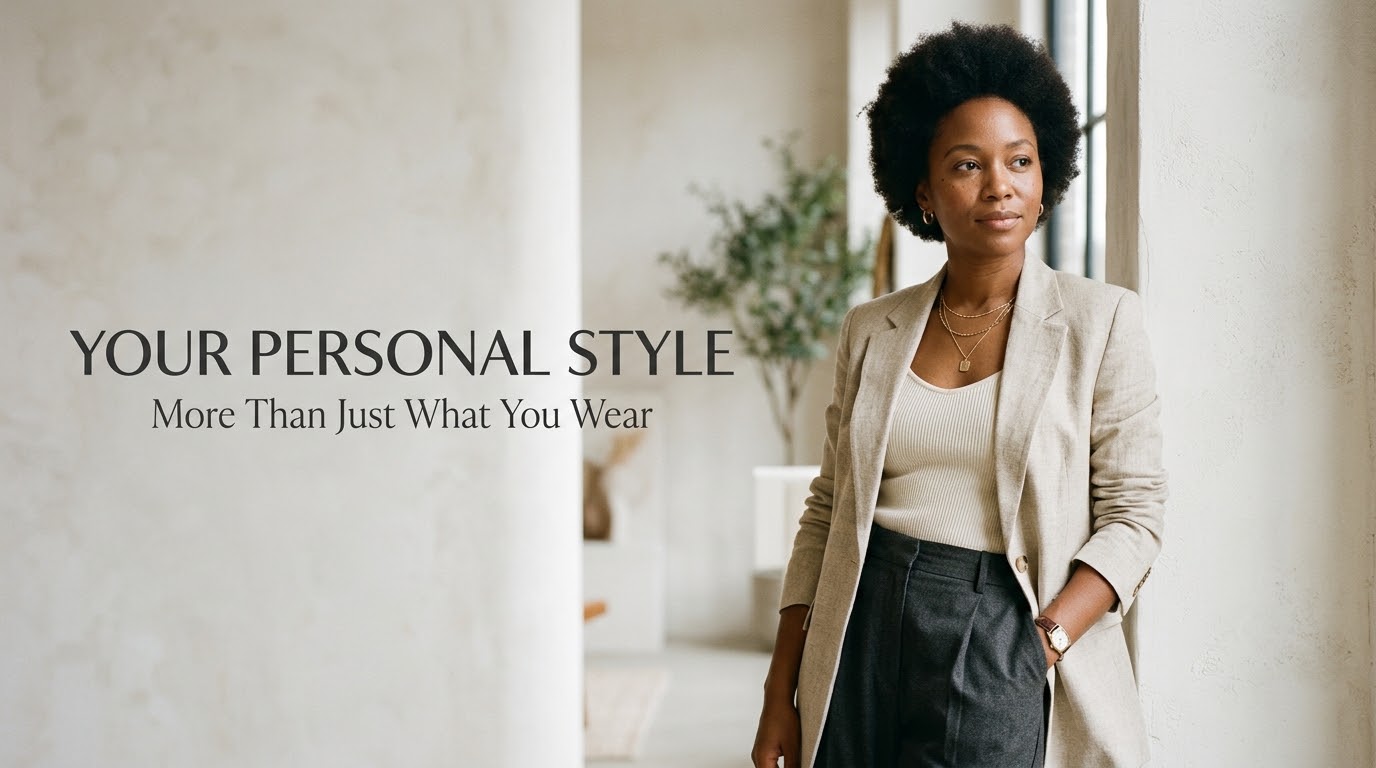
Developing a personal style is not simply about knowing which clothes are fashionable or putting together attractive outfits. It is about understanding what you enjoy wearing, what makes you feel comfortable, and how you want to express yourself through clothing.
Yet, finding that style can be surprisingly difficult. You might admire elegant outfits on social media, love the way someone else dresses, or feel tempted to change your entire wardrobe whenever a new fashion trend becomes popular. Sometimes, the more fashion inspiration you consume, the less certain you become about your own preferences.
The truth is that personal style does not have to fit into a particular aesthetic or fashion category. It should reflect your personality, lifestyle and preferences rather than become another standard you feel pressured to meet.
So, how do you develop a personal style that genuinely makes you feel confident? It starts with understanding yourself before deciding what belongs in your wardrobe.
Table of Contents
- 1. Understand What You Naturally Enjoy Wearing
- 2. Find Inspiration Without Copying Other People
- 3. Understand How Clothing Can Influence How You Feel
- 4. Stop Dressing Only to Meet Other People’s Expectations
- 5. Create a Personal Style Vocabulary
- 6. Consider Your Actual Lifestyle
- 7. Experiment With Different Looks
- 8. Recognise Patterns in Your Existing Wardrobe
- 9. Make Comfort Part of Your Personal Style
- 10. Allow Your Style to Evolve
- A Simple Exercise to Help You Discover Your Personal Style
- Final Thoughts
1. Understand What You Naturally Enjoy Wearing
Before buying new clothes or trying to create a completely different look, take some time to understand what you already enjoy wearing.
Think about the outfits you repeatedly reach for. Are you naturally drawn to simple, understated clothing? Do you enjoy feminine dresses, structured outfits, relaxed silhouettes, or a combination of different styles?
Pay attention to the colours, fabrics, cuts and outfit combinations that make you feel good. You may discover that you consistently prefer certain features even if you have never given your style a name.
Also, distinguish between clothes you admire and clothes you genuinely enjoy wearing. You might appreciate a dramatic outfit on someone else but feel much more comfortable in something simple and understated.
There is no need to force yourself into an aesthetic simply because it looks attractive. Your personal style should reflect your actual preferences, not just the outfits you admire from a distance.
2. Find Inspiration Without Copying Other People
Fashion inspiration can be useful when you are trying to understand your preferences. Pinterest, Instagram, fashion blogs and magazines can expose you to combinations you may not have considered before.
However, there is a difference between using inspiration to develop your taste and copying someone else’s entire wardrobe.
For example, you might admire a particular influencer’s elegant outfits. Instead of trying to recreate every look, identify what attracts you. Is it the colour coordination, the clean silhouettes, the accessories, or the way the clothes fit?
Once you understand what you like about an outfit, you can interpret those elements in a way that suits your own body, budget and lifestyle.
This approach gives you room to develop a recognisable style without feeling that you have to look exactly like someone else.
3. Understand How Clothing Can Influence How You Feel
Clothing does more than cover the body. It can also carry personal, cultural and social meanings that influence how we experience ourselves.
Think about how you feel when wearing an outfit that makes you feel well put together compared with something you chose without much thought. The difference may not be dramatic, but clothing can influence your mood, self-perception and how you approach certain situations.
Psychologists Adam and Galinsky introduced the term enclothed cognition in a 2012 study. Their experiments explored how clothing can influence psychological processes through two factors: the symbolic meaning attached to an item and the physical experience of wearing it.
In their experiments, participants who wore a lab coat associated with a doctor’s role performed better on certain attention tasks than participants in comparison conditions. The findings suggest that what clothing represents to us, as well as the experience of wearing it, can matter psychologically.
However, this does not mean that wearing expensive clothes, formal outfits or a particular fashion aesthetic automatically makes someone confident. The study focused on specific experimental conditions, not every type of clothing or everyday confidence.
The useful takeaway is that your clothing choices can be connected to how you want to feel and present yourself. If you associate certain outfits with feeling comfortable, capable or expressive, those associations may become part of your personal style.
4. Stop Dressing Only to Meet Other People’s Expectations
One of the biggest obstacles to developing personal style is the desire to look fashionable according to other people’s standards.
Social media can make this particularly challenging. You see people embracing different aesthetics, from quiet luxury and old money fashion to streetwear, minimalism and feminine dressing. Before long, you may start feeling that your own wardrobe is outdated or that you need to adopt a particular look to appear stylish.
There is nothing wrong with exploring different aesthetics. The problem is when you begin making clothing decisions mainly because you want approval or fear being judged.
Personal style becomes difficult to recognise when every decision is based on what other people are wearing.
Instead of asking whether an outfit is fashionable enough, ask whether it reflects your preferences and suits the way you want to dress. You can appreciate a trend without participating in it.
5. Create a Personal Style Vocabulary
Sometimes, developing personal style becomes easier when you can describe the look you are trying to achieve.
Choose three to five words that represent how you would like your outfits to look or feel. These could include:
- Elegant
- Relaxed
- Feminine
- Minimal
- Classic
- Creative
- Structured
- Effortless
- Modern
You do not have to choose words from this list. The important thing is to select descriptions that genuinely appeal to you.
For example, if your words are elegant, relaxed and minimal, you might naturally gravitate towards well-fitted trousers, simple tops, comfortable shoes and understated accessories.
These words can also become a useful shopping guide. When considering a new purchase, ask whether the item works with the style you are trying to develop.
Your style vocabulary is not a set of strict fashion rules. It is simply a way to make your preferences easier to recognise.
6. Consider Your Actual Lifestyle
A personal style that looks beautiful in photographs may not be practical for your everyday life.
For example, someone who spends most of their week in an office may have different clothing needs from someone who works remotely, travels frequently or spends much of their day outdoors.
Your wardrobe should reflect the activities you actually do. Consider your work environment, climate, daily responsibilities, social life and the occasions you regularly attend.
This does not mean your wardrobe has to be boring or entirely practical. You can still experiment with interesting pieces, accessories and different silhouettes. The goal is to make sure your style works with your life rather than constantly feeling separate from it.
When your clothes suit your daily routine, getting dressed becomes easier and you are more likely to wear the things you own.
7. Experiment With Different Looks
You do not have to discover your personal style all at once. Sometimes, you only learn what works for you by trying different combinations.
Experiment with colours, accessories, proportions, fabrics and silhouettes. Try pairing an item you already own with something you would not normally consider wearing together.
You may discover that you enjoy a particular combination more than you expected. You may also realise that certain styles look attractive in theory but do not feel right when you wear them.
Give yourself permission to experiment without expecting every outfit to be perfect. Personal style develops through experience, and not every fashion decision has to become a permanent part of your wardrobe.
8. Recognise Patterns in Your Existing Wardrobe
Your current wardrobe can tell you a lot about your personal style, especially if you pay attention to the clothes you wear most often.
Look at your favourite outfits and identify what they have in common. Perhaps you repeatedly choose neutral colours, high-waisted trousers, flowing dresses, structured jackets or simple accessories.
Also, notice the clothes you rarely wear. Are they uncomfortable? Do they feel too formal for your lifestyle? Did you buy them because they were trendy rather than because you genuinely liked them?
These patterns can help you understand which clothing choices work for you and which ones do not.
Taking photographs of outfits you enjoy wearing can also help. Over time, you may notice recurring combinations and details that are difficult to recognise when you are making individual shopping decisions.
9. Make Comfort Part of Your Personal Style
There is a common assumption that looking stylish requires sacrificing comfort. But an outfit that constantly needs adjusting or makes you uncomfortable may not be one you enjoy wearing.
Consider the fit, fabric, footwear and how easily you can move in your clothes. A beautiful pair of shoes may not be a good addition to your wardrobe if they make walking uncomfortable. A fitted outfit may look attractive but feel restrictive throughout the day.
Comfort does not mean ignoring appearance or avoiding clothes that require some getting used to. It simply means considering how an outfit feels as well as how it looks.
Confidence is not about wearing something impressive at the expense of your comfort. It is about finding a balance between appearance, practicality and personal preference.
10. Allow Your Style to Evolve
Your personal style does not have to remain the same throughout your life.
Your preferences may change as you grow older, experience different environments, develop new interests or move into a different stage of life. The clothes you loved a few years ago may no longer represent how you want to dress today.
That does not mean your previous style was wrong. It simply means your preferences are evolving.
Rather than feeling pressured to maintain one particular aesthetic, allow yourself to make adjustments. Keep the elements you still enjoy and explore new ones when your interests change.
A personal style should give you room to express yourself, not become another box you have to stay inside.
A Simple Exercise to Help You Discover Your Personal Style
If you are still unsure about your personal style, try this simple exercise before buying more clothes.
- Choose five outfits you genuinely enjoy wearing. These can be outfits from your existing wardrobe or photographs of looks you have worn before.
- Identify what they have in common. Look at the colours, silhouettes, fabrics, fit and accessories.
- Write down three words that describe them. For example, you might choose classic, comfortable and feminine.
- Identify what you rarely wear. Consider why those pieces do not work for you. Is it the fit, colour, comfort or the fact that they do not suit your lifestyle?
- Use your observations when shopping. Look for pieces that complement the outfits and preferences you have already identified.
You do not need to replace your entire wardrobe to develop a personal style. Sometimes, understanding what you already own is the best place to begin.
Final Thoughts
Developing a personal style that makes you feel confident is less about following fashion rules and more about understanding your own preferences.
It involves recognising what you enjoy wearing, learning from inspiration without copying others, considering your lifestyle and becoming comfortable with your choices.
You do not need an expensive wardrobe, a perfectly curated aesthetic or a collection of trending pieces to look stylish. What matters is finding clothes that reflect your personality, suit your everyday life and make you feel comfortable expressing yourself.
Ultimately, the best personal style is not the one that receives the most attention from other people. It is the one that feels like you.
References
- Adam, H., & Galinsky, A. D. (2012).
Enclothed cognition.
Journal of Experimental Social Psychology, 48(4), 918–925. - Slepian, M. L., Ferber, S. N., Gold, J. M., & Rutchick, A. M. (2015).
The cognitive consequences of formal clothing.
Social Psychological and Personality Science, 6(6), 661–668. - Horton, C. B., Adam, H., & Galinsky, A. D. (2025).
Evaluating the evidence for enclothed cognition: Z-curve and meta-analyses.
Personality and Social Psychology Bulletin, 51(2), 203–221.

I have been surfing online more than three hours today, yet I never found any interesting article
like yours. It is pretty worth enough for me. In my opinion, if all website
owners and bloggers made good content as you did, the internet will be a
lot more useful than ever before.