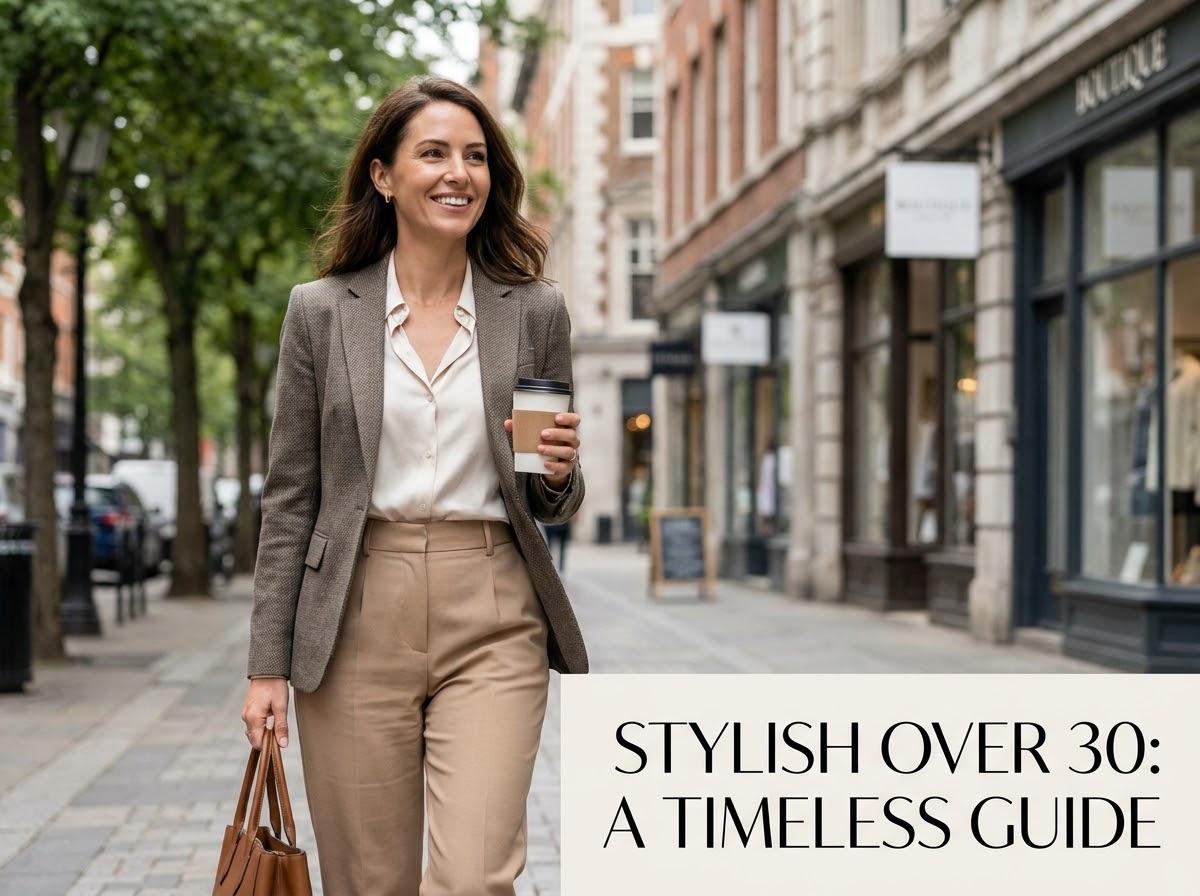
There’s something interesting that happens to your style after 30.
Thank you for reading this post, don't forget to subscribe!You start caring less about wearing every trend you see online and more about finding clothes that actually feel like you.
You might still love fashion. You might still enjoy experimenting with new looks. But suddenly, comfort, quality, confidence, and versatility start mattering a lot more.
And honestly? That’s not a bad thing.
Because looking stylish after 30 isn’t about trying harder.
It’s often about trying less—but being more intentional.
You don’t need a closet overflowing with clothes. You don’t need designer labels from head to toe. And you definitely don’t need to dress a certain way simply because you’ve reached a particular age.
The goal is to look polished without looking like you spent three hours figuring out what to wear.
Here’s how to make that happen.
1. Figure Out What Your Personal Style Actually Is
Before buying another outfit, take a moment to figure out what you genuinely like.
This sounds obvious, but how often do we buy clothes because they look amazing on someone else?
You see a woman on Instagram wearing a blazer, wide-leg trousers, and loafers and think, I need that outfit.
Then you buy everything.
And somehow, when you put it on, it doesn’t feel like you at all.
That’s because inspiration and personal style aren’t necessarily the same thing.
Start paying attention to the outfits you naturally reach for.
Do you prefer simple and minimal?
Feminine and romantic?
Classic and polished?
Relaxed and casual?
Bold and statement-making?
Your style doesn’t need a complicated label. You just need to recognize what makes you feel comfortable and confident.
The easiest way to look effortless is to wear things that already feel natural to you.
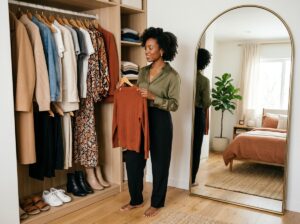
2. Stop Buying Clothes Just Because They’re Trending
This doesn’t mean you have to avoid trends after 30.
Please wear the trendy jeans if you love them.
Wear the bold color.
Try the interesting shoes.
Fashion should still be fun.
The difference is that you don’t have to make every trend part of your personality.
Before buying something that’s suddenly everywhere, ask yourself:
Would I still want this if I hadn’t seen it on social media?
That’s a surprisingly useful question.
If the answer is no, leave it.
Your wardrobe should reflect your personal style, not whatever the algorithm happens to be promoting this week.
A few carefully chosen trends can make a classic wardrobe feel current without making you look like you’re trying desperately to keep up.

3. Pay Attention to Fit
Here’s one of the easiest ways to make an outfit look more expensive and polished:
Make sure it fits properly.
It doesn’t matter whether your clothes came from a luxury boutique or an affordable high-street store. If the fit is wrong, the outfit can look unfinished.
Maybe the trousers are too long.
The blazer is pulling across the shoulders.
The dress is too loose in one place and too tight in another.
You don’t necessarily need a completely new wardrobe.
Sometimes you just need better-fitting clothes.
And don’t be afraid of a tailor.
A small alteration can completely change the way a garment looks on you.
The goal isn’t to squeeze yourself into a particular size.
It’s to find clothing that works with the body you have right now.
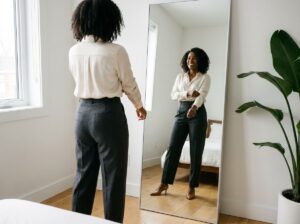
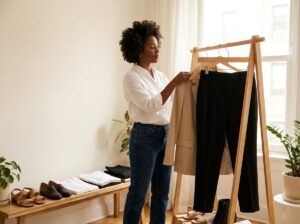
4. Build Outfits Around Good Basics
You don’t need hundreds of pieces to look stylish.
In fact, having too many options can sometimes make getting dressed harder.
Start with dependable pieces that work with each other.
Think about:
– A well-fitting pair of jeans
– Tailored trousers
– A simple white or neutral top
– A good blazer
– A versatile dress
– A quality cardigan or sweater
– A polished pair of flats or loafers
– A pair of clean, simple sneakers
– A structured everyday bag
These pieces don’t have to be boring.
They simply give you a foundation.
Once you have reliable basics, you can add personality through jewelry, shoes, bags, colors, prints, or one interesting statement piece.
That’s how you create an outfit that looks intentional without looking overworked.
5. Learn the Power of Simple Accessories
Sometimes an outfit doesn’t need more clothes.
It needs better finishing touches.
A simple outfit can suddenly look completely different with the right earrings, sunglasses, belt, watch, or handbag.
And you don’t need to wear everything at once.
That’s where many people go wrong.
They add statement earrings, a chunky necklace, a bold belt, a patterned bag, and dramatic shoes—and suddenly the accessories are competing with each other.
Try choosing one or two things that stand out.
For example, a simple black dress with gold earrings and a structured handbag can look incredibly polished without being complicated.
The goal isn’t to accessorize more. It’s to accessorize with intention.

6. Create a Color Palette That Makes Getting Dressed Easier
Have you ever stood in front of a full wardrobe thinking:
“I have nothing to wear.”
You’re probably not alone.
One reason this happens is that you have lots of individual pieces but very few pieces that actually work together.
Creating a simple color palette can help.
You don’t have to wear beige, black, white, and gray every day.
Instead, choose a few colors that you naturally love and that work well together.
For example, you might build your wardrobe around black, cream, denim, brown, and soft blue.
Then add a few brighter colors when you want more personality.
The result?
You can mix and match more easily, which means you spend less time trying to create an outfit.
And that is exactly what effortless style should feel like.

7. Don’t Confuse Expensive With Stylish
This one is important.
Looking stylish after 30 does not mean you need to spend a fortune.
An expensive outfit can still look poorly styled.
And an affordable outfit can look incredibly elegant.
What often makes an outfit appear polished is not the price tag.
It’s the combination of:
fit + condition + simplicity + styling.
A clean, well-fitting pair of trousers can look better than an expensive pair that doesn’t fit properly.
A simple handbag in good condition can look more sophisticated than a heavily decorated one covered in logos.
So instead of asking, “Is this expensive enough?”
Ask:
“Does this look good on me, and will I actually wear it?”
That’s a much better investment.

8. Take Care of Your Clothes
Want your wardrobe to look more expensive?
Take care of it.
It sounds simple, but clothes that are wrinkled, faded, stretched, covered in lint, or missing buttons can make an otherwise beautiful outfit look careless.
Pay attention to the little things.
Steam your clothes when necessary.
Replace missing buttons.
Clean your shoes.
Remove lint.
Store delicate pieces properly.
And don’t underestimate the power of clean, well-maintained shoes and bags.
You don’t need brand-new clothes every month.
Sometimes your existing wardrobe simply needs a little attention.

9. Let Your Outfit Breathe
One of the secrets to effortless style is knowing when to stop.
You don’t need every part of your outfit to make a statement.
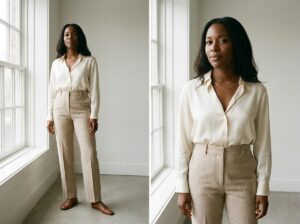
If you’re wearing wide-leg trousers, perhaps keep the top relatively simple.
If your dress is bold, let the accessories be quieter.
If you’re wearing statement shoes, you don’t necessarily need a dramatic handbag too.
Think of your outfit as a conversation.
If everyone is shouting at the same time, nobody knows what to listen to.
Give your clothes some breathing room.
That’s often what makes an outfit feel sophisticated rather than overly styled.
10. Dress for Your Life, Not Someone Else’s
This might be the most important rule of all.
Your wardrobe needs to make sense for your actual life.
If you work from home most days, you probably don’t need ten formal office outfits.
If you’re constantly running errands, your wardrobe should include comfortable pieces that still make you feel put together.
If you attend lots of events, invest more in pieces that can be dressed up.
Don’t build a fantasy wardrobe for the woman you think you should be.
Build one for the woman you actually are.
Because when your clothes fit your lifestyle, getting dressed becomes much easier.

11. Don’t Be Afraid to Repeat Outfits
Somewhere along the way, fashion made us feel like wearing the same outfit twice was a problem.
It isn’t.
In fact, stylish women often have a few combinations they know work incredibly well.
The trick is to change the details.
Wear the same trousers with a different top.
Style the same dress with sneakers one day and heels another.
Add a blazer.
Change your handbag.
Switch your jewelry.
You don’t need a completely new outfit every time you leave the house.
Personal style is often about repeating what works—not constantly reinventing yourself.

12. Confidence Is the Finishing Touch
You can follow every style rule in the world and still feel uncomfortable if you’re wearing something that doesn’t feel like you.
That’s why confidence matters so much.
Maybe you love dresses.
Maybe you’re happiest in jeans and a great shirt.
Maybe you don’t care about luxury fashion at all.
Maybe you love color.
Maybe you prefer neutrals.
There is no single definition of stylish after 30.
The woman who looks effortlessly stylish isn’t necessarily the woman wearing the most fashionable clothes.
She’s often the woman who looks comfortable in what she’s wearing.
She isn’t constantly adjusting her outfit.
She isn’t wondering whether everyone approves.
She knows what works for her.
And that confidence changes everything.
So, How Do You Dress Stylish Without Trying Too Hard After 30?
The answer isn’t buying more clothes.
It’s becoming more intentional about the clothes you already own and the pieces you choose to add.
Find your personal style.
Prioritize fit.
Build around versatile basics.
Choose trends selectively.
Take care of your clothes.
Use accessories thoughtfully.
And most importantly, stop dressing according to someone else’s idea of what a woman over 30 should look like.
Your 30s aren’t the age when fashion ends.
They’re often the age when you finally start understanding what you actually like.
And there’s something incredibly stylish about that.

Frequently Asked Questions
• What should a woman wear after 30 to look stylish?
There isn’t one specific formula. Focus on clothes that fit well, suit your lifestyle, and reflect your personality. A combination of quality basics, thoughtful accessories, and a few trend pieces can create a polished wardrobe.
• Should women over 30 stop wearing trendy clothes?
Absolutely not. Being over 30 doesn’t mean you have to abandon trends. The key is choosing trends that genuinely suit your style instead of wearing something simply because everyone else is wearing it.
• How can I look expensive without spending a lot of money?
Focus on fit, clean and well-maintained clothing, simple accessories, coordinated colors, and versatile pieces. An outfit doesn’t have to be expensive to look polished.
• How many clothes should a woman have in her wardrobe after 30?
There’s no magic number. The important thing is having enough useful pieces to create outfits for your actual lifestyle. A smaller wardrobe where most pieces work together can be much more useful than an overflowing closet.
• What is the biggest style mistake women make after 30?
One common mistake is dressing according to age-based rules rather than personal preference. Your 30s don’t require a completely different personality or wardrobe. Your style should evolve naturally with your lifestyle, confidence, and preferences.
Final Thoughts

Getting older doesn’t mean you have to become less fashionable.
If anything, it can give you the freedom to become more yourself.
You don’t have to chase every trend.
You don’t have to own a closet full of designer clothes.
You don’t have to dress younger—or older; than you feel.
You simply need clothes that make sense for the woman you’re becoming.
Because the best kind of style isn’t the one that makes people think, “She really tried.”
It’s the one that makes them think:
“She just naturally looks good.”
And honestly, isn’t that the whole point?