
Neutral colors are some of the easiest colors to wear, yet putting together an interesting neutral outfit can sometimes feel surprisingly difficult.
You might have a wardrobe full of black, white, cream, beige, grey and brown, but still find yourself staring at your clothes, wondering why your outfit looks a little plain. Everything matches, nothing looks particularly wrong, and yet something seems to be missing.
The good news is that you don’t need bright colours, expensive accessories or a completely new wardrobe to fix this.
Neutral outfits can look elegant, relaxed, modern, sophisticated or effortlessly stylish. The difference often comes down to how you combine your colours, fabrics, proportions and finishing details.
If you love neutral colours but don’t want your outfits to look dull, here are some simple ways to make them more interesting without making them complicated.
Table of Contents
- 1. Understand That Neutral Doesn’t Mean One Colour
- 2. Mix Different Shades Instead of Matching Everything Exactly
- 3. Pay Attention to Fabric and Texture
- 4. Play With Proportions
- 5. Use Accessories With Intention
- 6. Don’t Underestimate the Importance of Fit
- 7. Add a Little Contrast
- 8. Pay Attention to Grooming and Finishing Details
- 9. Build Outfits Around Your Real Lifestyle
- 10. Common Mistakes to Avoid When Wearing Neutral Colors
- Easy Neutral Outfit Combinations to Try
- Final Thoughts
1. Understand That Neutral Doesn’t Mean One Colour
One reason neutral outfits can look uninspiring is that people sometimes treat neutrals as though they all have the same effect.
But black, ivory, chocolate brown, charcoal grey, camel, taupe, navy and cream can create very different moods.
Some neutrals feel warm and soft, while others create a sharper, cooler appearance. Even within one colour family, there can be noticeable differences.
For example, an outfit made entirely of pale beige pieces might feel soft and understated. The same outfit with a dark brown bag and chocolate shoes could look more defined.
Before putting an outfit together, think about the overall mood you want. Do you want something soft and relaxed, clean and structured, or a little more dramatic?
That small decision can help guide your colour combinations.
2. Mix Different Shades Instead of Matching Everything Exactly
You don’t have to wear the exact same shade of beige from head to toe to look coordinated.
In fact, mixing slightly different shades can make a neutral outfit more visually interesting.
Try combining:
- Cream with camel.
- Chocolate brown with ivory.
- Black with light grey.
- Navy with white.
- Taupe with dark brown.
- Charcoal with soft grey.
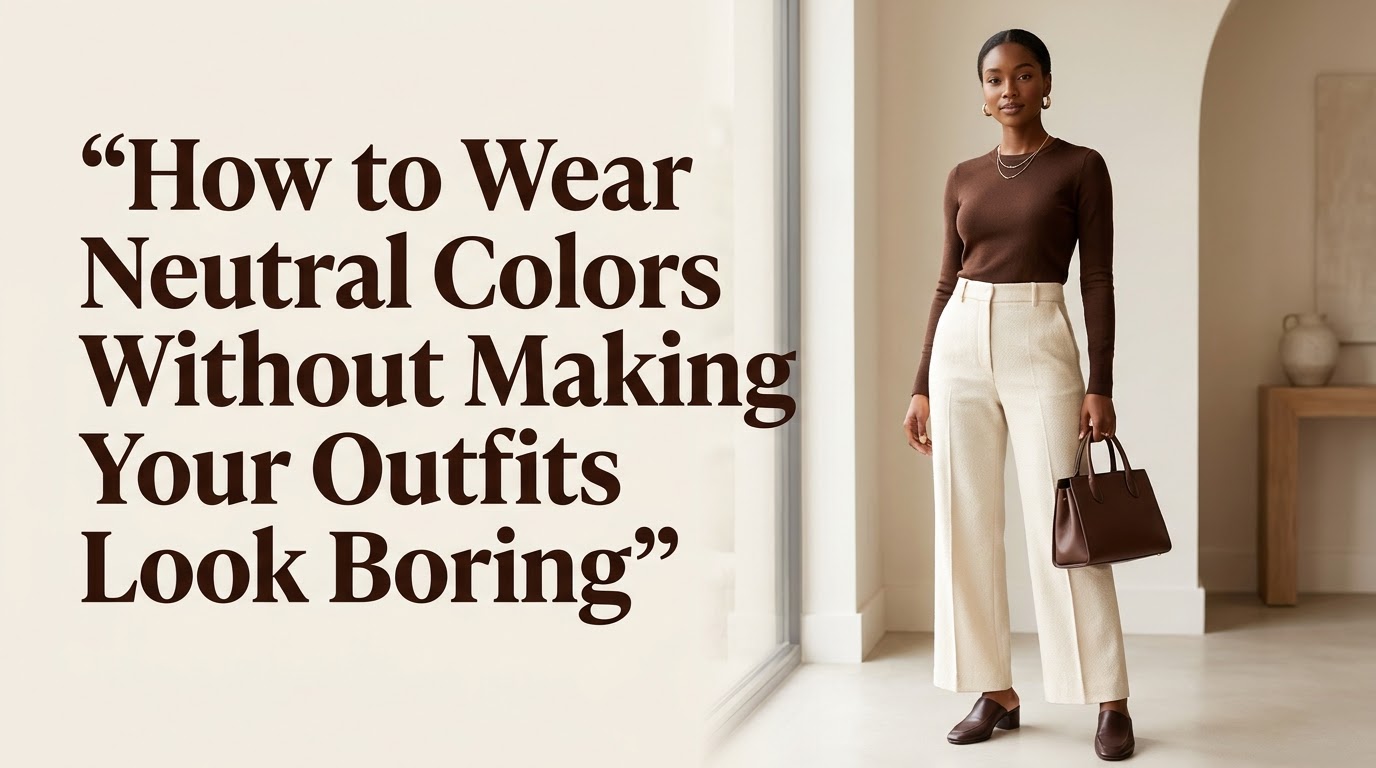
One combination I particularly like is cream trousers with a chocolate brown top and a darker brown handbag. The colours belong to a similar family, but the differences prevent the outfit from looking flat.
You can also create a monochromatic outfit, which uses variations of one colour. An all-brown outfit, for instance, can look beautiful when the shades and textures have enough variation.
The trick is to make the combination look intentional rather than accidentally mismatched.
3. Pay Attention to Fabric and Texture
When your outfit contains very few colours, texture becomes more noticeable.
This is why two outfits in the same colour can look completely different depending on the materials used.
Imagine wearing a cream cotton T-shirt with cream linen trousers. Now imagine pairing a cream knit top with a smooth satin skirt in a similar shade.
Both outfits use neutral colours, but the fabrics create different visual effects.
You can make neutral outfits more interesting by combining materials such as:
- Cotton and denim.
- Linen and knitwear.
- Leather or faux leather with soft fabrics.
- Ribbed knits with smooth trousers.
- Structured cotton with flowing materials.
You don’t need to combine several textures in one outfit. Sometimes, just one contrasting fabric is enough.
Also, consider your climate and comfort. In hot weather, breathable cotton and linen may be more practical than heavy layering. You can create visual interest without wearing fabrics that make you uncomfortable.
4. Play With Proportions
An outfit can contain beautiful colours and still feel a little uninteresting if every piece has the same shape and visual weight.
This is where proportions come in.
Try combining different silhouettes instead of wearing pieces that all have a similar fit.
For example:
- Wide-leg trousers with a fitted or neatly tucked top.
- A relaxed shirt with straight-leg jeans.
- A structured blazer over a simple, lightweight top.
- A flowing skirt with a more defined waistline.
- A boxy top with slim or straight-cut trousers.
These combinations can create a more deliberate-looking outfit without adding extra colours.
You don’t have to follow rigid rules about what body shapes should wear. The aim is simply to explore how different proportions work together and choose what makes you feel comfortable.
A useful question to ask is: Where do I want the visual focus of this outfit to be?
Once you have an idea, it becomes easier to choose the right combination.
5. Use Accessories With Intention
Accessories can make a simple neutral outfit feel finished, but you don’t need a lot of them.
Sometimes, the difference between an outfit that feels incomplete and one that feels thoughtfully styled is a single detail.
Consider adding:
- A structured handbag.
- A simple belt.
- Gold or silver jewellery.
- A watch.
- Sunglasses.
- A scarf.
- Shoes with an interesting shape or finish.
For instance, a black top and black trousers can look perfectly fine on their own. Adding a belt, a structured bag and a pair of polished shoes may give the outfit a more considered appearance.
You can also introduce a small accent colour through your accessories. Burgundy, red, olive green or muted blue can work beautifully with many neutral combinations.
However, accessories should complement the outfit, not compete with it.
If your clothing already has interesting proportions or textures, you may not need much else.
6. Don’t Underestimate the Importance of Fit
Sometimes, what makes a neutral outfit look boring isn’t the colour at all. It may be the fit.
When an outfit has a simple colour palette, details such as shoulder seams, trouser length, waist placement and the way fabric falls can become more noticeable.
This doesn’t mean every outfit needs to be tailored or fitted closely to the body.
Relaxed clothing can look just as stylish as structured clothing. What matters is choosing proportions that feel intentional and work for you.
Pay attention to things like:
- Whether the shoulders sit comfortably.
- Whether trousers fall the way you prefer.
- Whether the fabric pulls, bunches or constantly needs adjusting.
- Whether the outfit feels balanced when you look at the complete combination.
If a piece you love needs a small alteration, it may be worth considering. But you don’t need to alter every garment to achieve a stylish look.
Comfort and fit are part of what makes clothes wearable, not just attractive in photographs.
7. Add a Little Contrast
Contrast gives the eye something to notice.
This doesn’t always mean introducing another colour. You can create contrast through light and dark shades, shapes, materials or accessories.
A few examples:
- White trousers with a black top.
- A cream blouse with dark denim.
- A soft oversized knit with structured trousers.
- A simple dress with a defined belt.
- A dark outfit with a lighter handbag.
You can even create contrast through your choice of shoes.
For example, a pair of dark brown shoes with cream trousers can add definition without making the outfit feel overly dramatic.
If you prefer softer outfits, you don’t have to create strong contrast. Subtle differences between shades and fabrics can be enough.
The important thing is to give the outfit some visual variation.
8. Pay Attention to Grooming and Finishing Details
This is one of the easiest things to overlook when putting together an outfit.
You can choose beautiful clothes, coordinate the colours and select the right accessories, but small finishing details can still affect the overall impression.
Wrinkled clothing, visibly worn shoes, loose threads or a handbag that needs cleaning can distract from an otherwise lovely outfit.
Before leaving the house, take a quick look at:
- Whether your clothes need pressing or steaming.
- Whether your shoes are clean and in good condition.
- Whether buttons, hems and seams are secure.
- Whether your accessories work together.
- Whether your outfit is comfortable and appropriate for where you’re going.
Grooming can also contribute to how polished an outfit feels. This doesn’t mean you need elaborate makeup, a particular hairstyle or an expensive beauty routine.
Your usual grooming preferences are enough. The idea is to pay attention to the small details that help you feel ready for the day.
A simple outfit doesn’t need to be perfect. It just benefits from a little care.
9. Build Outfits Around Your Real Lifestyle
It is easy to admire a beautiful neutral outfit online and assume you need similar pieces to dress well.
But an outfit that looks wonderful in a photograph may not suit your daily routine.
Perhaps the outfit includes delicate shoes, several layers or a fabric that requires special care. If those things don’t work for your lifestyle, you may find yourself avoiding the clothes altogether.
Instead, think about where you actually spend your time.
If you work in an office, you might get plenty of use from tailored trousers, comfortable blouses, structured bags and versatile shoes.
If your routine is more casual, dark jeans, cotton shirts, simple dresses and comfortable flats may be more useful.
If you live somewhere warm, like much of Nigeria, lightweight fabrics, breathable layers and comfortable footwear may be more practical for everyday dressing.
You can still enjoy sophisticated outfits without dressing as though you’re heading to a formal event every day.
The most useful wardrobe is one that works for your life.
10. Common Mistakes to Avoid When Wearing Neutral Colors
A few habits can make neutral outfits harder to style than they need to be.
Buying every piece in the same shade: Matching can look intentional, but when everything has a similar colour, texture and shape, the outfit may lack definition. Try introducing one contrasting shade or fabric.
Thinking neutral outfits must be expensive: You don’t need designer bags, luxury fabrics or expensive jewellery to look put together. Fit, coordination, condition and thoughtful styling can make a difference at different price points.
Over-accessorising to make the outfit interesting: Adding more accessories isn’t always the answer. If your outfit feels busy, remove one or two things and see whether it looks better.
Ignoring comfort: Shoes that hurt or clothes that restrict movement can make an outfit less enjoyable to wear. Choose pieces that suit your routine.
Buying new clothes before checking your wardrobe: You may already own the pieces needed to create more interesting combinations. Try restyling what you have first.
Easy Neutral Outfit Combinations to Try
If you need some inspiration, here are a few combinations you can recreate with pieces you may already own.
1. The everyday polished look
A white or cream T-shirt, straight-leg blue or dark denim jeans, a brown belt and simple flats or loafers.
This works when you want something casual but thoughtfully coordinated.
2. The soft monochromatic look
A cream top, beige or camel trousers, a slightly darker handbag and simple jewellery.
Varying the shades helps create interest while keeping the outfit understated.
3. The relaxed sophisticated look
A chocolate brown top, cream wide-leg trousers, comfortable sandals and a structured handbag.
The darker top creates contrast against the lighter trousers without introducing a bright colour.
4. The simple office outfit
A black top, grey tailored trousers, a blazer and comfortable closed-toe shoes.
You can change the mood with different accessories or by removing the blazer when appropriate.
5. The casual all-black outfit
A black T-shirt, black straight-leg jeans, a belt and black shoes.
To make this combination more interesting, pay attention to the fit of each piece, the fabric textures and the finishing details.
6. The weekend neutral look
An olive or taupe shirt, dark jeans, simple sneakers and a crossbody bag.
This is an easy way to wear neutral-inspired colours without relying only on black, white and beige.
Remember that these are starting points, not strict outfit formulas. Adjust the colours, silhouettes and shoes to suit your preferences.
Final Thoughts
Neutral colours are not boring. Sometimes, we simply expect colour to do all the work in an outfit.
Once you start paying attention to texture, proportions, contrast, fit and finishing details, you realise there are plenty of ways to make simple outfits more interesting.
You don’t need to buy an entirely new wardrobe or adopt a particular fashion aesthetic to achieve this.
Start with the clothes you already own. Experiment with different combinations, notice what you enjoy wearing and build from there.
And if you love simple outfits, there’s nothing wrong with that. An outfit doesn’t have to be dramatic or attention-grabbing to look beautiful.
Sometimes, the most stylish thing you can wear is something simple that fits well, feels comfortable and reflects your own taste.