Traveling the world should feel liberating, but the modern airport experience often feels like a series of financial traps and stress tests. Between soaring checked bag fees, agonizing waits at the baggage carousel, and the terrifying risk of lost luggage, overpacking has become one of the most expensive ways to travel.
Mastering carry-on only travel is no longer just a trend for minimalist backpackers; it is a vital strategy for smart, budget-conscious travelers who refuse to compromise on convenience or style.
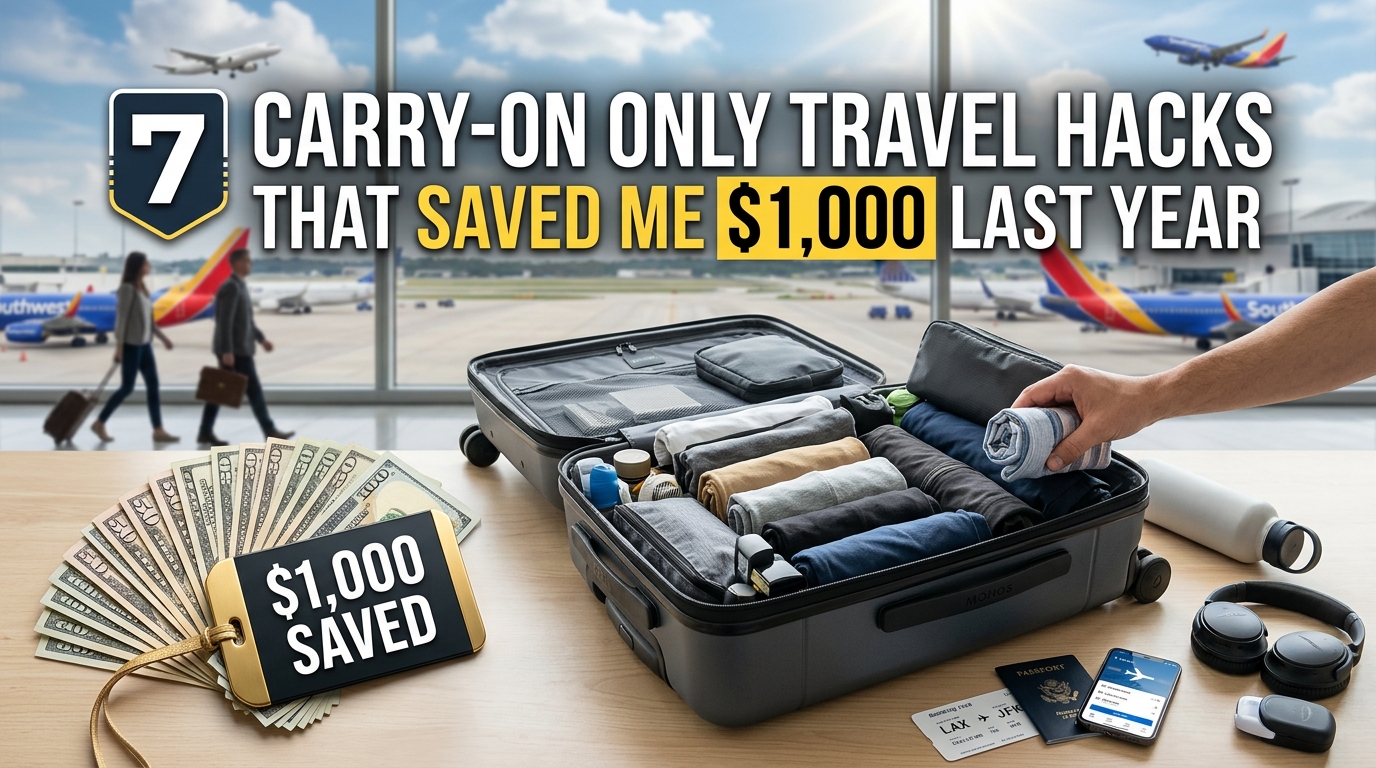
By streamlining packing methods, rethinking wardrobe versatility, and taking advantage of modern airline policies, traveling with just a single bag is easier than ever. These seven actionable, SEO-optimized carry-on packing hacks saved $1,000 in hidden travel costs over the past year—and will completely transform the way you pack.
1. Ditch Checked Bag Fees for Good
The most direct financial benefit of carry-on travel is eliminating checked baggage fees. Major domestic and international airlines have quietly raised baggage rates, making checked luggage a significant expense for frequent flyers.
The Hidden Cost of Checked Luggage
Standard checked bag fees currently average $35 to $45 each way on domestic routes. On a round-trip ticket, that adds up to $70 to $90 per person. For international flights or multi-leg itineraries involving regional carriers, those numbers can easily double or triple.
If you take four or five trips a year, checked bag fees alone can easily top $500 annually.
| Travel Scenario | Checked Bag Cost (Round-Trip) | Carry-On Cost | Annual Savings (5 Trips) |
| Domestic US Carriers | $70 – $90 | $0 | $350 – $450 |
| European Budget Airlines | $80 – $140 | $0 – $30 | $400 – $700 |
| Multi-City Long-Haul | $150 – $200 | $0 | $750 – $1,000 |
Avoiding Airline Penalty Charges
Budget carriers are infamous for strict size and weight restrictions at the gate. Bringing a oversized carry-on to the boarding area can result in gate-check penalties of up to $75.
To prevent unexpected fees:
-
Invest in a bag designed specifically around standard international overhead dimensions (typically 22″ x 14″ x 9″ or 55 x 35 x 23 cm).
-
Choose lightweight, durable luggage frames so the bag itself does not eat into your total weight limit.
2. Master the “1-2-3-4-5-6” Packing Rule
Overpacking stems from preparing for “what if” scenarios rather than reality. A structured packing framework removes the guesswork and stops you from bringing clothes that never leave your suitcase.
       ┌─────────────────────────────────────────────────┐
       │             THE 1-2-3-4-5-6 METHOD              │
       └─────────────────────────────────────────────────┘
         [1] Hat / Outerwear Piece
         [2] Pairs of Shoes (Wear 1, Pack 1)
         [3] Bottoms (Pants, Skirts, or Shorts)
         [4] Tops / Layers (Shirts, Sweaters)
         [5] Pairs of Socks & Underwear
         [6] Accessories / Miscellaneous Items
Building a High-Utility Capsule Wardrobe
The key to making a limited wardrobe feel expansive is color cohesion. Stick to a base palette of neutral colors—navy, black, cream, olive, or beige—and ensure every top pairs with every bottom.
-
Focus on Performance Fabrics: Choose wrinkle-resistant, breathable materials like merino wool, linen blends, and technical synthetics. Merino wool in particular resists odors naturally, meaning garments can be worn multiple times without washing.
-
Layering over Bulk: Instead of packing one heavy winter coat, pack lightweight layers (a base layer, a mid-layer sweater, and a packable windbreaker or rain jacket). This saves massive amounts of space while adapting far better to fluctuating weather.
3. Compress, Compression, Compression
Standard packing cubes keep items organized, but compression packing cubes change the game entirely by mechanically removing excess air from your clothing.
Packing Cubes vs. Vacuum Bags
While vacuum-seal bags require a vacuum pump or hand-rolling, compression cubes use a double-zipper system to squeeze garments flat. They reduce clothing volume by roughly 30% to 40%, letting you fit more into less space without destroying the shape of your clothes.
 [ Standard Packing ] ──► Loose Clothes + Trapped Air ──► Bulk & Wrinkles
 [ Compression Cube ] ──► Zip Base ──► Zip Outer Compression ──► 40% Space Saved
Roll, Don’t Fold
For maximum space optimization within compression cubes:
-
The Ranger Roll: Roll t-shirts, dresses, and casual trousers tightly rather than folding them flat. Rolling minimizes hard creases and fills small gaps in your luggage.
-
Heavy Items First: Place rolled jeans and heavier items at the bottom of the cube, followed by lighter materials like t-shirts and undergarments on top before compressing.
4. Leverage the Personal Item Hack
Almost every major airline allows one carry-on bag for the overhead bin plus one personal item that fits beneath the seat in front of you. Mismanaging this second bag is one of the biggest missed opportunities in modern travel.
Maximizing Under-Seat Real Estate
Instead of a small purse or basic laptop sleeve, opt for a maximum-capacity travel backpack or weekender bag engineered for under-seat dimensions (roughly 18″ x 14″ x 8″).
-
Pack Heavy Stuff Here: Since personal items are rarely weighed at gate check-in compared to overhead bags, store your heaviest gear—electronics, camera gear, chargers, and heavy toiletry kits—in your personal item.
-
Keep Essentials Accessible: Use dedicated pockets for your passport, boarding passes, noise-canceling headphones, and a reusable water bottle so you never have to open the overhead bin mid-flight.
5. Wear Your Heaviest Gear on the Plane
The clothes on your body do not count toward bag weight or size limits. Utilizing transit outfit strategy saves critical luggage space and helps stay well under strict airline weight limits.
The Ultimate Transit Outfit
Plan your travel day outfit around your largest, heaviest, and bulkiest items:
-
Footwear: Wear your heavy walking boots, bulky sneakers, or leather shoes on the flight. Pack only your lightest footwear (like flat sandals or low-profile slip-ons).
-
Outerwear: Wear or carry your thickest jacket, heavy knit cardigan, or blazer through security and onto the plane. Once on board, roll the jacket up to use as a neck pillow or lumbar support.
-
Pockets are Luggage: Utilize coat pockets for heavier accessories like power banks, heavy cameras, or dense books during boarding.
6. Switch to Solid Toiletries
Liquid restrictions (the standard 3-1-1 rule) create constant headaches at airport security lines and force travelers to buy overpriced travel-sized products at their destination. Liquid spills inside a suitcase can also ruin hundreds of dollars worth of clothing.
The Solid Beauty & Grooming Revolution
Replacing liquid toiletries with solid alternatives frees up space in your quart-sized TSA bag while cutting costs completely.
-
Solid Shampoo & Conditioner Bars: A single 3-ounce shampoo bar lasts up to 80 washes—replacing two to three standard plastic bottles.
-
Solid Toothpaste Tabs & Deodorant Stick: Toothpaste tablets eliminate messy tubes, while solid stick deodorants avoid liquid limits altogether.
-
Solid Perfume/Cologne & Sunscreen Sticks: Compact, spill-proof, and easily passing through TSA checkpoints without a second glance.
By transitioning 80% of your grooming routine to solids, your liquid bag will easily hold essential serums or prescription skincare without cramming.
7. Embrace the Mid-Trip Laundry Method
The biggest barrier to packing light is the fear of running out of clean clothes. The secret of seasoned long-term travelers is simple: pack for 5 to 7 days maximum, regardless of how long the trip lasts, and wash clothes along the way.
How Wash-and-Wear Saves Hundreds
Relying on hotel laundry services is exorbitantly expensive, with hotels often charging $5 to $10 per shirt or pair of pants. Doing laundry independently costs next to nothing and adds flexibility to your schedule.
-
Sink Washing Essentials: Carry a few laundry detergent sheets (zero-waste, ultra-light, non-liquid sheets) in your bag. Wash socks, underwear, and lightweight tops in the bathroom sink or shower, wring them in a towel, and hang them to dry overnight.
-
Laundromat Micro-Breaks: If traveling for more than two weeks, schedule a 1-hour break at a local laundromat. It offers a authentic glimpse into local life while getting a week’s worth of clothes washed and dried for under $5.
The True ROI of Carry-On Travel
Mastering the art of carry-on travel is about far more than just dodging baggage fees. It eliminates the frustration of waiting 45 minutes at a crowded carousel, removes the anxiety of lost baggage, and gives you complete agility when navigating cobblestone streets or crowded public transport.
By applying these 7 packing hacks, you’ll travel faster, stress less, and keep an extra $1,000 in your pocket for what truly matters: incredible meals, memorable experiences, and your next great adventure.