Scrolling through BeautyTok feels like entering an endless loop of “life-changing” hacks, “miracle” products, and aesthetic trends. From glowing skin shortcuts to heatless hair wizardry, every week brings a new viral routine promising to revolutionize your vanity.
However, social media filters, strategic ring lights, and sponsored content often obscure reality. What looks flawless in a 15-second video can easily translate to clogged pores, wasted money, or a sticky mess in real life.
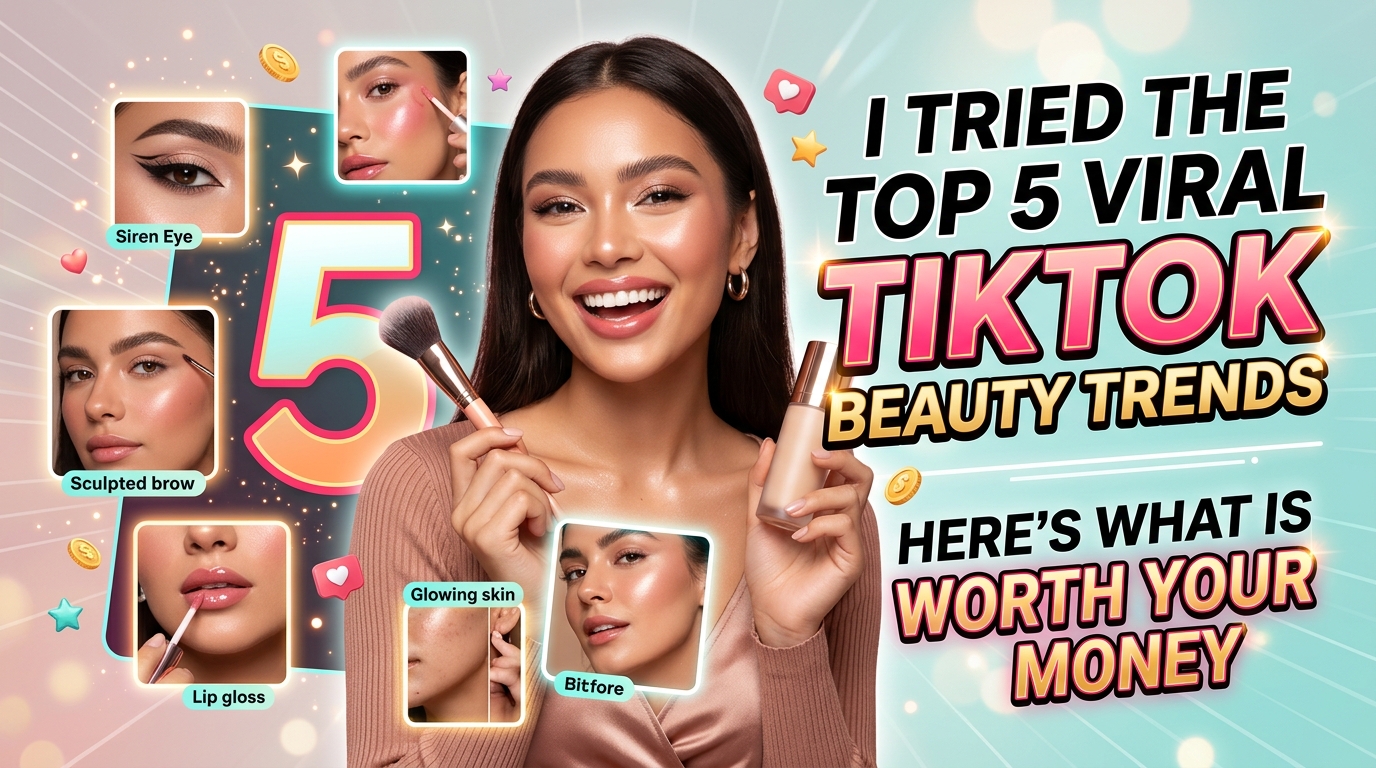
To save your wallet and your morning routine, I put 5 of the biggest viral TikTok beauty trends through a rigorous, real-world test. Here is the honest verdict on what delivers genuine results and what belongs in the digital trash bin.
The Testing Criteria
Each trend was evaluated over two weeks based on four core parameters:
-
Ease of Use: Is it practical for a everyday routine?
-
Cost vs. Value: Does the result justify the price or effort?
-
Skin & Hair Health: Does it support long-term wellness, or is it a quick fix with side effects?
-
The “Real Life” Test: How does it look in natural daylight without ring lights or video filters?
1. Skin Cycling
┌────────────────────────────────────────────────────────────────────────┐
│                        THE 4-NIGHT SKIN CYCLE                          │
└────────────────────────────────────────────────────────────────────────┘
  NIGHT 1: Exfoliate (AHAs/BHAs)  ──►  NIGHT 2: Retinoid (Vitamin A)
  NIGHT 3: Recovery (Ceramides)   ──►  NIGHT 4: Recovery & Hydration
What It Is
Pioneered by dermatologists and popularized on TikTok, Skin Cycling is a strategic 4-night evening routine rotation: Night 1 is exfoliation, Night 2 is a active retinoid, and Nights 3 and 4 are dedicated strictly to barrier recovery using hydrating serums and rich ceramide creams.
The Real-World Result
This trend lives up to the hype. Many people damage their skin barrier by layering powerful active ingredients every single night. By introducing built-in “rest days,” skin gets time to repair its moisture barrier while still benefiting from retinoids and chemical exfoliants.
-
Pros: Prevents redness, peeling, and irritation; ideal for sensitive skin; simplifies product use.
-
Cons: Requires patience—results are gradual rather than instant.
Verdict: WORTH YOUR MONEY. This isn’t just a gimmick; it’s a dermatologist-backed framework that restores damaged skin barriers and saves money on unnecessary serums.
2. Heatless Sock Curls
[ Damp Hair ] ──► Wrap Around Sock/Satin Rod ──► Sleep Overnight ──► Bouncy Waves
What It Is
Using a long pair of athletic socks or a flexible satin ribbon, damp hair is wrapped away from the face in a braided motion before sleeping. In the morning, unwrap for voluminous, heat-free blowout curls.
The Real-World Result
If you struggle with heat damage from curling irons or blow dryers, this hack is a game-changer—with a slight learning curve. The key is ensure your hair is 80% dry, not soaking wet; otherwise, you wake up with damp, frizzy waves. Using a satin or silk curling rod yields better, sleeker results than cotton socks.
-
Pros: Zero heat damage; saves 20 minutes of styling time in the morning; long-lasting hold.
-
Cons: Can be uncomfortable to sleep on if wrapped too tightly; takes a few tries to master wrapping tension.
Verdict: WORTH YOUR MONEY (AND EFFORT). A $10 satin heatless curling set delivers a $50 salon blowout look without destroying your hair’s health.
3. “Slugging” with Petroleum Jelly
What It Is
Originating in K-beauty and taking TikTok by storm, “slugging” involves coating your entire face in a layer of occlusive ointment (like Vaseline or Aquaphor) as the final step of your evening skincare routine to lock in moisture overnight.
The Real-World Result
Slugging works on a mechanical level because petroleum jelly forms an occlusive barrier that prevents transepidermal water loss. If you have extremely dry skin or live in a cold climate, you wake up with noticeably plump, hydrated skin.
However, if you are prone to acne or have oily skin, stay away. While Vaseline itself isn’t technically comedogenic, sealing in dead skin cells and natural sebum overnight is a recipe for breakouts.
-
Pros: Unbeatable overnight hydration for dry skin; incredibly cheap.
-
Cons: Ruins pillowcases; triggers breakouts on acne-prone or combination skin; feels heavy and sticky.
Verdict: SITUATIONAL (PROCEED WITH CAUTION). Great as a spot-treatment for dry patches or during winter for dry skin types, but skip it if you are acne-prone.
4. Lip Basting / Lip Staining Hacks
What It Is
Instead of traditional lipsticks, creators use peel-off lip stains or heavy layers of chemical exfoliants followed by thick ointments (“lip basting”) to achieve long-lasting, smudge-proof lip color and smooth texture.
The Real-World Result
Peel-off lip stains look satisfying in videos, but in practice, they wear off unevenly—leaving a patchy line around the outer edges of your lips after lunch. The “lip basting” method (applying a tiny dab of glycolic acid followed by a rich balm) does effectively smooth flaky lips, but peel-off stain products themselves are largely novelty gimmicks.
-
Pros: Fun process; tint lasts a few hours without transferring onto cups.
-
Cons: Dries out lips over time; wears off unevenly; peel-off masks can be messy to apply neatly.
Verdict: PASS. Invest in a high-quality tinted lip balm or traditional lip stain instead. The extra steps and drying formulas aren’t worth the fuss.
5. Foundation In Water Hack
What It Is
Dropping several squirts of liquid foundation into a glass of plain water, stirring it, and then scooping the floating foundation out to apply to the face. The claim? Water separates the excess oils, making the foundation transfer-proof, waterproof, and ultra-dewy.
The Real-World Result
This is classic social media illusion. Science dictates that water and oil- or silicone-based foundations do not mix. Dropping foundation into water merely wastes a massive amount of product (which sits at the bottom of the glass) and dilutes the carefully engineered preservatives and emulsions in your makeup.
| Test Parameter | Standard Foundation Application | Foundation In Water Method |
| Product Waste | Minimal (1–2 pumps) | Extreme (3–5 pumps lost in glass) |
| Coverage | Smooth, controllable | Watery, sheer, inconsistent |
| Longevity | Full-day wear | Separates quickly on skin |
| Mess Factor | Low | High (requires cleaning glassware) |
Verdict: TOTAL PASS. This hack wastes expensive makeup and ruins the formulation of your foundation. Stick to a good primer and setting spray for long-lasting wear.
The Final Scorecard
  ┌─────────────────────────────────────────────────────────────┐
  │                    THE BEAUTYTOK VERDICT                    │
  ├─────────────────────────────────────────────────────────────┤
  │  [✔] Skin Cycling         ──►  HOLY GRAIL (Worth It)        │
  │  [✔] Heatless Sock Curls  ──►  HOLY GRAIL (Worth It)        │
  │  [⚠️] Slugging            ──►  PROCEED WITH CAUTION         │
  │  [✘] Peel-Off Lip Stains  ──►  SKIP IT                      │
  │  [✘] Foundation in Water  ──►  GIMMICK (Save Your Money)    │
  └─────────────────────────────────────────────────────────────┘
The key to navigating social media beauty trends is separating clever marketing from basic cosmetic science. Prioritize methods that support long-term skin and hair health over quick viral tricks, and your routine—and wallet—will thank you.