
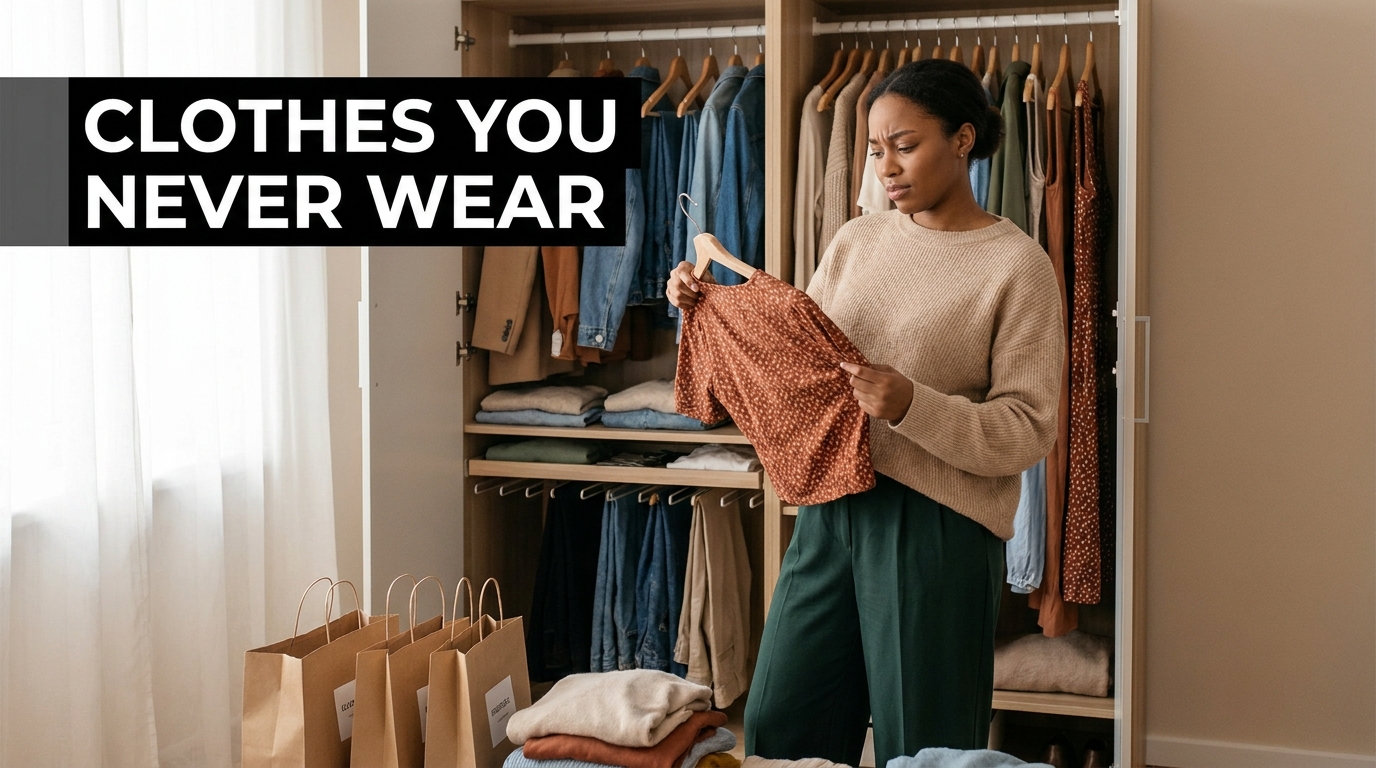
Have you ever looked through your wardrobe and wondered why you have so many clothes but still feel like you have nothing to wear? You remember buying those pieces. Some looked beautiful in the shop, others seemed like bargains, and a few were purchases you were genuinely excited about. Yet, somehow, they rarely make it into your everyday outfits.
This is a common shopping frustration, and it is not always about buying the wrong clothes. Sometimes, the problem lies in the decisions we make before we even get to the checkout.
From shopping for an imaginary lifestyle to getting carried away by discounts, certain habits can leave you with a wardrobe full of clothes that do not quite fit your real life. Here are eight shopping mistakes that may be costing you money and taking up valuable wardrobe space.
Table of Contents
- 1. Buying Clothes for the Person You Wish You Were
- 2. Buying Something Just Because It Is on Sale
- 3. Ignoring What You Already Own
- 4. Choosing Clothes Based Only on How They Look in the Shop
- 5. Following Trends That Do Not Fit Your Personal Style
- 6. Buying the Wrong Size Because You Plan to Change Your Body
- 7. Ignoring the Practical Details
- 8. Shopping When You Are Bored or Upset
- How to Shop for Clothes You Will Actually Wear
- Final Thoughts
1. Buying Clothes for the Person You Wish You Were
Sometimes, we shop for a lifestyle we admire rather than the one we actually live.
You might buy elegant heels because you imagine attending more formal events, a collection of workout outfits because you plan to become more active, or beautiful dresses for occasions that rarely come around.
There is nothing wrong with buying clothes for the life you hope to have. The problem begins when most of your shopping is based on an imagined version of your routine.
Think about how you spend most of your week. Do you work from home, commute to an office, attend social events regularly, or spend most of your time handling everyday responsibilities? Your wardrobe should reflect those realities.
Before buying something, consider how often you are realistically going to wear it. If you cannot think of an actual occasion or situation where it would fit into your life, it may not be a necessary purchase.
2. Buying Something Just Because It Is on Sale
A discount can make an item feel like an opportunity you should not miss. Something that originally seemed too expensive suddenly looks affordable, and you may convince yourself that buying it is a smart financial decision.
But spending less than the original price does not automatically mean you have saved money.
Imagine buying a dress for ₦15,000 because it was reduced from ₦30,000, even though you would never have considered paying ₦15,000 for it in the first place. You have still spent money on something you may not need.
This is where it helps to separate the excitement of getting a bargain from the actual value of the item.
Ask yourself one simple question: Would I still want this if it were not on sale?
If the answer is no, the discount may be influencing your decision more than the clothing itself.
3. Ignoring What You Already Own
One of the easiest ways to end up with unworn clothes is to shop without considering your existing wardrobe.
You might buy a beautiful patterned skirt, an unusual pair of trousers, or a top in a colour you love. But when you get home, you realise that very few things you own work with it.
The item itself may not be the problem. It simply does not fit into the wardrobe you have already built.
This is why it helps to think beyond individual pieces when shopping. Instead of asking whether you like an item, ask whether it works with the clothes you already own.
Try to identify at least two or three outfits you could create with a potential purchase. If you struggle to find combinations, consider whether you are buying something that will require several additional purchases just to make it wearable.
A wardrobe becomes more useful when its pieces work together rather than exist as separate outfits that are difficult to combine.
4. Choosing Clothes Based Only on How They Look in the Shop
Clothes can look completely different on a mannequin, hanger, or model compared with how they look and feel on your own body.
Sometimes, we become so attracted to the design that we overlook important details such as fit, comfort, fabric, and how the garment moves when we wear it.
A pair of trousers might look beautiful but feel uncomfortable when sitting down. A fitted dress may look appealing in the mirror but restrict your movement. A top might have a lovely design but require constant adjusting throughout the day.
These details matter because clothing is not meant to look good only when you are standing still in front of a mirror. You should be able to move, sit, walk, and carry out your normal activities comfortably.
Whenever possible, try clothes on before buying them. Pay attention to how they feel, not just how they look. If you cannot try an item on, check the measurements, fabric information, and return policy before making a purchase.
5. Following Trends That Do Not Fit Your Personal Style
Fashion trends can be exciting. They introduce new silhouettes, colours, accessories, and styling ideas. But not every trend deserves a place in your wardrobe.
It is easy to see an outfit repeatedly on social media and start feeling that you need something similar. You may buy it because it looks attractive on an influencer or because everyone seems to be wearing it.
However, liking an outfit on someone else does not necessarily mean you will enjoy wearing it yourself.
Your personal style is influenced by your preferences, lifestyle, comfort, and the way you like to present yourself. When you constantly buy clothes based on what is popular, you can end up with a wardrobe that reflects everyone else’s taste except your own.
Instead of following every trend, look for elements you genuinely appreciate. You might like the colour of a trending outfit but not the silhouette. Perhaps you enjoy the styling but would prefer a more practical version.
You can take inspiration from trends without allowing them to dictate every purchase.
6. Buying the Wrong Size Because You Plan to Change Your Body
Have you ever bought clothes that were slightly too small because you planned to lose weight, or kept a garment that was too big because you expected your body to change?
This habit can leave you with clothes that remain unworn for months or even years.
There is nothing wrong with having personal fitness or body goals. However, your wardrobe should not depend entirely on a future version of your body.
You deserve clothes that fit comfortably and make you feel good in the body you have today. Buying something that does not fit in the hope that it will eventually become wearable can turn shopping into another source of pressure.
If you genuinely love an item and expect to have it altered, consider whether the alteration is realistic and affordable. Otherwise, it may be better to choose something that fits you properly now.
7. Ignoring the Practical Details
Sometimes, we buy clothes because they look beautiful without considering what it will take to wear and maintain them.
A delicate fabric might require special washing. A dress may need a particular type of bra. A pair of shoes might look elegant but become uncomfortable after a short walk. Some garments wrinkle easily or require more care than your daily routine allows.
These details may seem minor when you are shopping, but they can become reasons you avoid wearing an item.
Think about your climate, daily activities, comfort preferences, and willingness to maintain certain fabrics before buying. If you know you rarely have time for delicate handwashing, a garment that requires constant special care may not be the most practical choice.
Beautiful clothes are more valuable when they fit naturally into your everyday life.
8. Shopping When You Are Bored, Upset, or Looking for a Quick Mood Boost
Shopping can be enjoyable, and buying something new can sometimes provide a temporary sense of excitement. However, when shopping becomes a regular response to boredom, frustration, or a difficult day, it can lead to purchases you did not really plan to make.
You might browse online stores simply because you have nothing else to do, add items to your cart when you feel stressed, or buy something because the thought of receiving a new package makes you happy.
The excitement can be real, but it may not last. Once the novelty wears off, you are left with the actual item and the question of whether you needed it.
A 2024 review by Beikverdi, Sipilä, and Tarkiainen examined research on the effects of impulse buying after a purchase. The review identified several possible outcomes, including satisfaction and pleasure, but also regret, guilt, and financial difficulties.
This does not mean every unplanned purchase is harmful. It simply highlights why it is worth paying attention to the reasons behind your shopping decisions.
One practical approach is to save items you like to a wishlist rather than buying them immediately. Give yourself some time to reconsider the purchase. If you still want the item and it fits your wardrobe and budget, you can make a more deliberate decision.
How to Shop for Clothes You Will Actually Wear
Building a useful wardrobe does not mean you should stop enjoying fashion or only buy basic clothing. It means becoming more intentional about the things you bring into your wardrobe.
Before making your next clothing purchase, consider these questions:
- Where will I wear this? Think of an actual occasion, activity, or part of your routine where the item would be useful.
- What can I wear it with? Consider whether it works with clothes, shoes, and accessories you already own.
- Would I still want it without the discount? This helps you separate genuine interest from the excitement of a bargain.
- Does it fit comfortably? Consider how it feels when you move, sit, and carry out everyday activities.
- Will I realistically maintain it? Think about washing instructions, fabric care, and any additional requirements.
You do not have to answer every question perfectly. The goal is simply to slow down enough to recognise whether you genuinely want an item or are reacting to the excitement of shopping.
And remember, you are allowed to leave a shop without buying anything. Finding something attractive does not mean you have to take it home.
Final Thoughts
A wardrobe full of unworn clothes is not necessarily a sign that you have poor fashion taste. Sometimes, it reflects the small decisions we make while shopping: buying for an imagined lifestyle, getting distracted by discounts, following trends without considering our preferences, or overlooking practical details.
The solution is not to become overly strict about every purchase. Fashion should still be enjoyable. But when you understand your shopping habits, you become better at recognising the difference between something you simply like and something you will genuinely wear.
Instead of focusing only on how many clothes you own, pay attention to how well they work for your lifestyle. A thoughtful wardrobe is not necessarily the biggest one. It is the one that gives you clothes you feel comfortable, confident, and happy wearing.
Reference’s
- Beikverdi, L., Sipilä, J., & Tarkiainen, A. (2024).
Post-purchase effects of impulse buying: A review and research agenda.
Journal of Consumer Behaviour, 23(3), 1512–1527. - D’Souza, C., Wong, W., El Habera, N., Brouwer, A. R., & Niininen, O. (2024).
Online impulse purchases versus planned purchases and the role of visual attributes.
Journal of Global Fashion Marketing, 15(4), 504–522.